






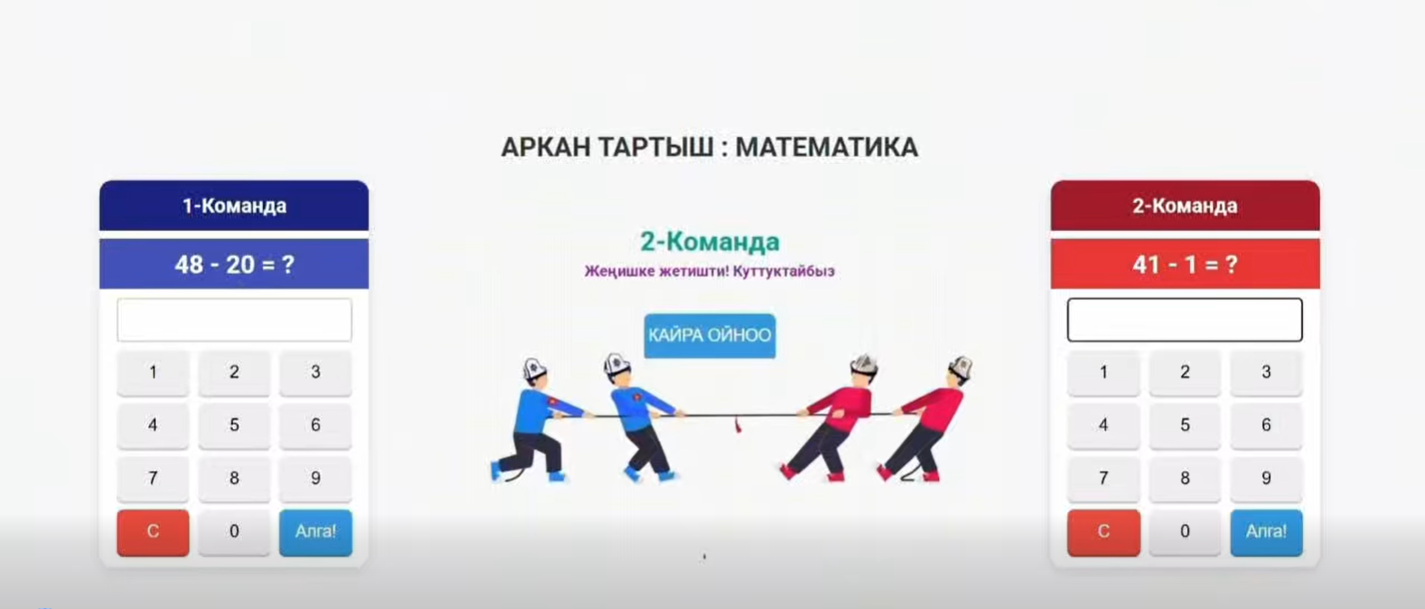
The lecturer of the “Applied Informatics and Information Security” Department of the Institute of Mathematics, Physics, Engineering and Information Technologies of Osh State University, the winner of the “Pedagogical Debut – 2025” contest, Janbolot Kalbaev, has developed a program version of the national game “Arkan Tartysh” (tug-of-war).
Within a short time, the game collected over 1 million views and gained huge popularity on social media platforms in Kyrgyzstan, Uzbekistan, and Kazakhstan.
Janbolot Iskenderovich Kalbaev states:
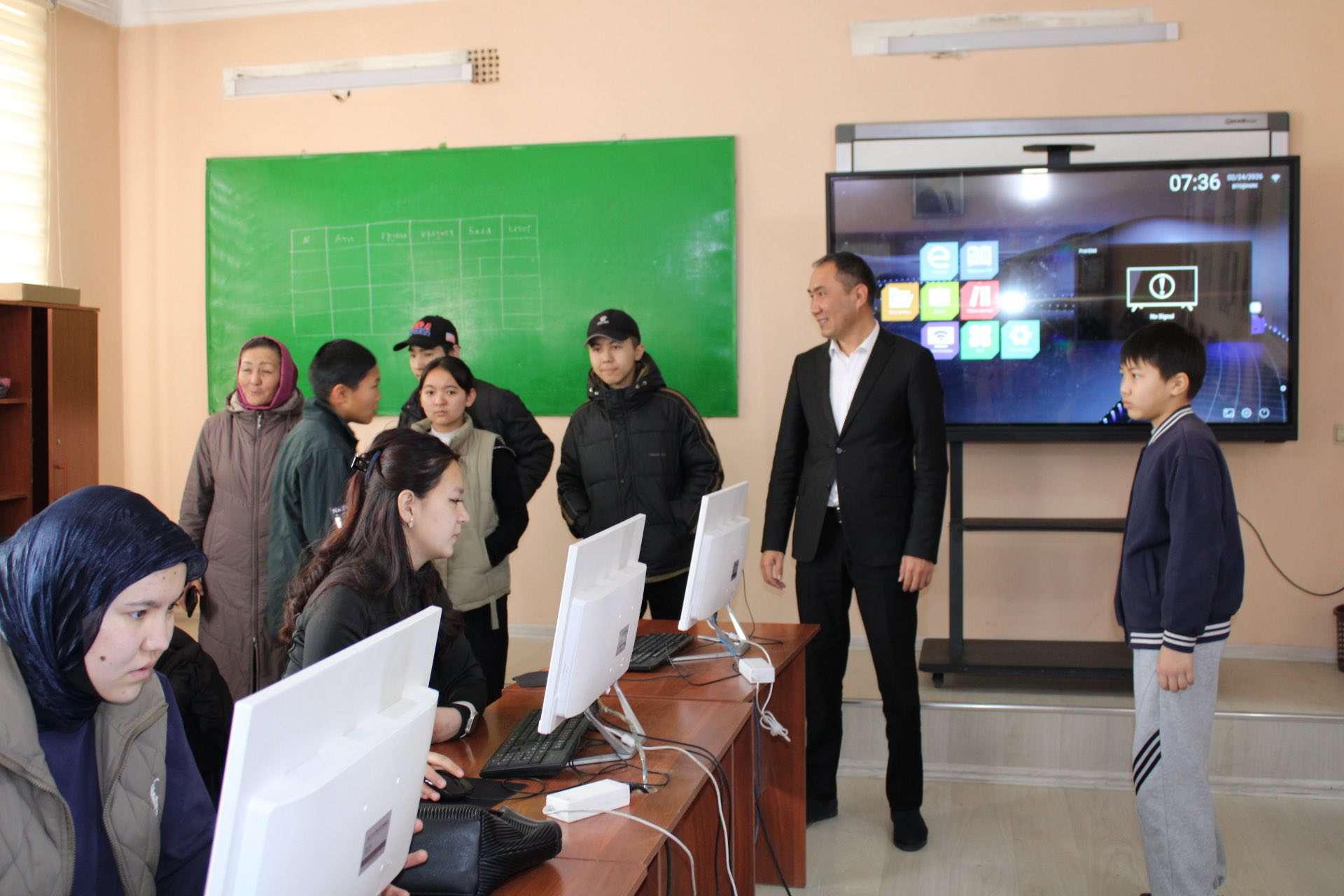
“In this modern format, the traditional game that requires physical strength is now replaced by logic, quick thinking, and mathematical reaction. While physical strength determines victory in the classic tug-of-war, in this interactive version, accuracy, fast mathematical thinking, and knowledge define the winner. Students showed high emotions, competitiveness, and activity. We once again saw how turning ordinary math problems into a game format makes the learning process easier and more enjoyable.
Combining modern technology with education and adapting a traditional game into a digital format is an important step toward the future of interactive learning. We are students of the IT era, so education must keep up with the times.”
Purpose of the game:
• Increase students’ interest in lessons
• Strengthen theoretical knowledge in a practical and emotional form
Automation: each time a team solves a problem correctly, the virtual rope automatically moves toward their side. The faster and more accurate the answers, the closer they are to victory.
Learning motivation: unlike monotonous problem-solving, this method teaches teamwork, fast thinking, and responsibility.
Emotions: the audience is filled with excitement! Adrenaline, competitive spirit, and the joy of a correct answer make the learning process unforgettable. Each student feels the impact of their knowledge on their team’s victory.
This is not just an experiment — it is a step that will change students’ attitude toward learning. I plan to expand such automated educational games in the future.”